







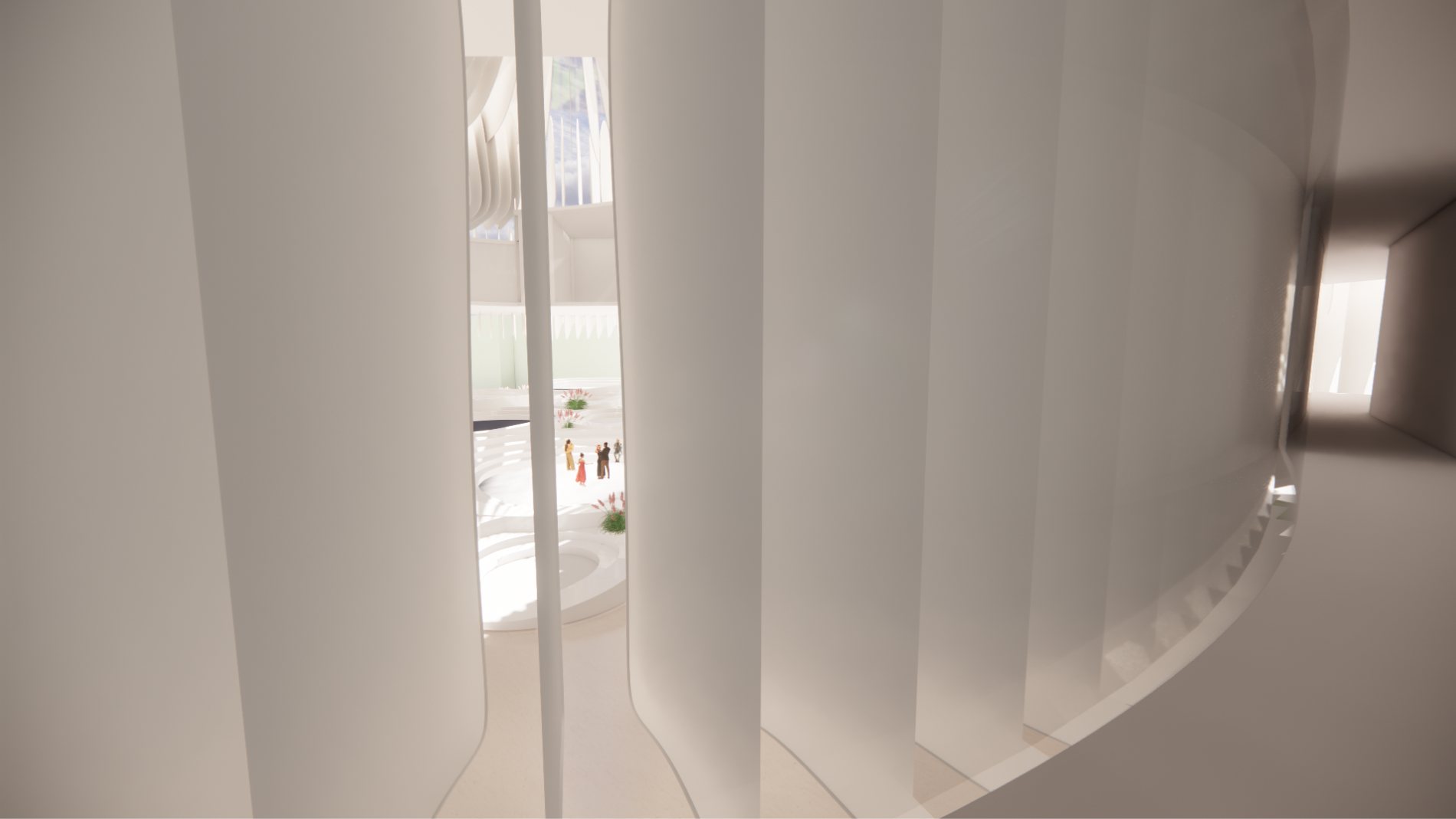


A Field of Lilies
A night installation that turns the lily’s six petal order into a structural system for shelter, glow, and gathering.
One petal
A single folded sheet of frosted acrylic. The unit everything else repeats.
Two layers of three
The rule comes straight out of the flower: six petals in two layers of three.
The rotational lock
The upper layer rotates so it bridges the gaps in the lower one. That overlap is what locks the module together.
A spine
Stacked, the overlap becomes a stable spine that reads as a column.
Spiral bloom
The same logic expands outward to form shelter: roughly 4 m at the peak, coming down to about 1.35 m at the edges.
A field
Repeating one module across the plan turns a single column into a field.
Cut it open.
The main module opens into Section A–A′, revealing the layered canopy and its central spine.
The acrylic petals are frosted, layered for soft light diffusion.
Design heights from the original study: approximately 4 m at the peak and 1.35 m at the edge.
Then the sun goes down.
Golden light warms the petals as the sun lowers and the shadows lengthen. The lanterns take over as night falls.
It is a night installation. Frosted acrylic petals layer so the light diffuses rather than glares; concrete conceals the base, and the steel does the holding.
One small rule. A whole field.
A calm night installation that translates the lily’s petal order into a buildable system: six petals in two layers of three, the upper layer rotated to bridge the gaps. The overlap becomes a spine; the same logic opens into shelter. Acrylic softens the light, concrete conceals the base, steel does the holding.
Rendered live from the original Rhino geometry.